Metaphoenix GmbH

Precision CNC Machined Metal Parts

Custom drawing parts for OEM buyers
Tight tolerance CNC capability
CNC turning/milling & 4-axis machines
Sold to Europe and North America

Material & Application

Material Selection and Its Impact on CNC Machining

In finishing, material determines stability. Hardness deviations affect tool deflection and surface finish. Residual stress reliefd during cutting causes dimensional drift. Right material selection keeps finishing passes predictable — and tolerances repeatable.

Materials & Process Engineering

Machinability, blank type and finish target are reviewed together

Material selection affects clamping, cutting parameters, deformation risk, surface finish and inspection priority.
How the material responds to cutting ?

Tool life, chip formation, and surface integrity.

Cast, forged, or bar stock — defines clamping strategy and stock removal.

Roughness, integrity, and the inspection method to verify it.

Material machining notes

Material Matters — Machining and Inspection Priorities by Material Type

The same tolerance specification does not apply uniformly across materials. Process planning must account for thermal stability, tool wear, burr formation, and post-machining movement.
Stainless Steel (304, 316L, 2205)
Watch for work hardening, cutting heat, tool wear, and surface finish consistency.
Alloy & Carbon Steel
Plan heat treatment, stress relief, and plating sequence before final tolerance machining.
Aluminum
High cutting speeds possible, but thin walls and flatness require controlled clamping and finishing passes.
Copper Alloy
Softness increases burr formation – affects tool geometry selection, deburring, and thread quality.
Cast & Ductile Iron
Manage blank allowance, casting skin, porosity risk, and datum selection for stable machining.
Casting & Forging Blanks
Review initial blank variation to ensure sufficient stock remains on critical surfaces after machining.

Applications

Application fields

Automotive

Precision machining for drivetrain, chassis, and structural components. Batch-to-batch consistency, process stability, and dimensional traceability — from first article to full production.

Industrial Machinery

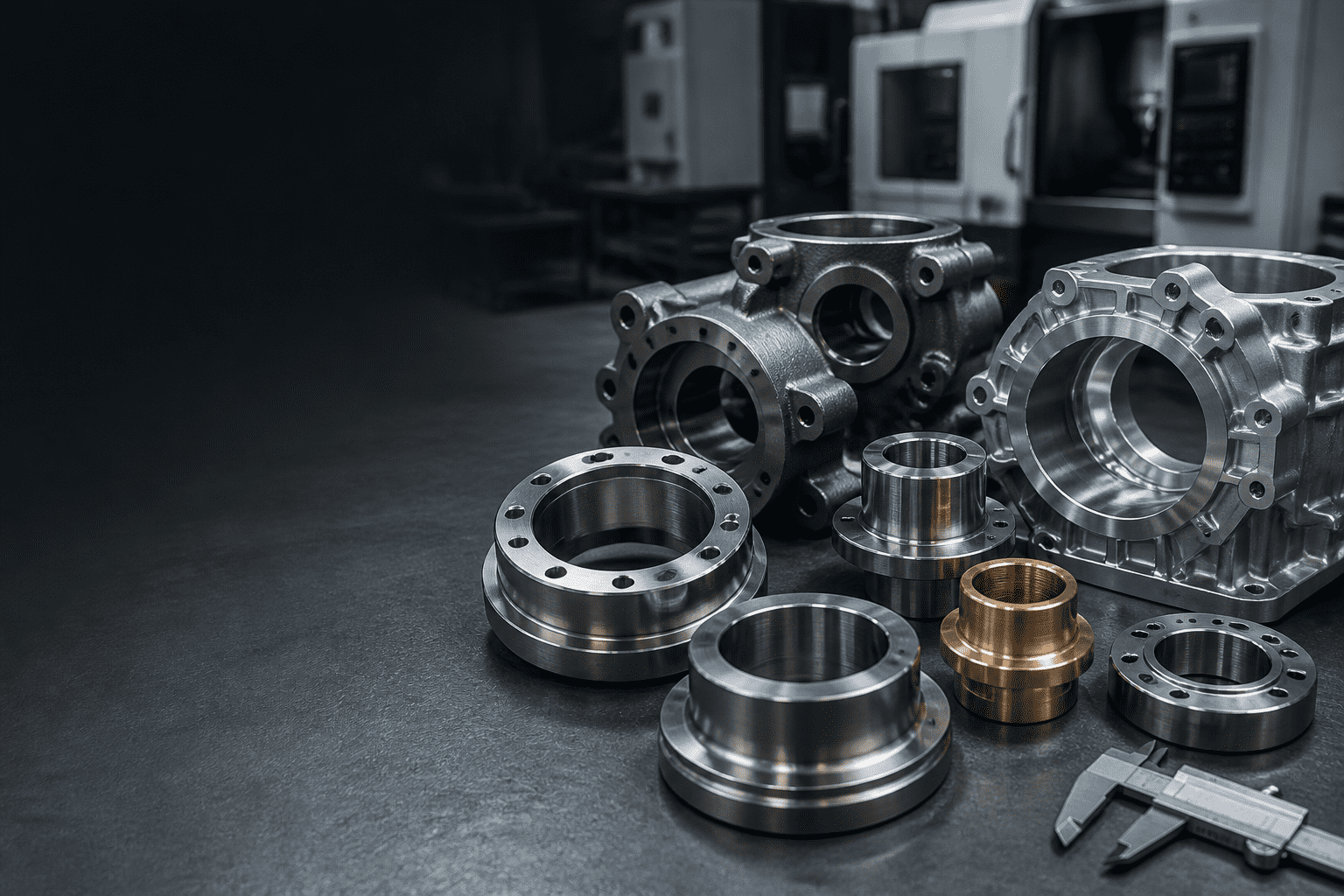
Gearboxes, pumps, valves, compressors, bearing housings, and wear parts — machined for continuous operation, load stability, and long service intervals. Surface finish, bore geometry, and material consistency are controlled at every stage.

Medical Accessories

Precision-machined components for diagnostic equipment, surgical instruments, and patient positioning systems. Process stability, surface integrity, and full dimensional traceability — documented for every batch.

Construction Equipment

Structural frames, boom assemblies, hydraulic components, and wear parts — machined to withstand heavy loads, shock loads, and abrasive conditions. Stress-relief and weld distortion control are built into every process plan.

Blank selection

Choosing the right blank can reduce machining risk before production starts

For OEM parts, blank selection is often an engineering decision rather than only a purchasing decision. Casting, forging, seamless pipe and bar stock each affect machining allowance, internal stress and inspection strategy.
Precision Casting

Useful for complex external shapes, but datum planning and allowance review are essential.

Forging Blank

Better strength direction for demanding parts, with final machining planned after heat treatment when required.

Seamless Pipe

Efficient for rings and sleeves, but roundness and stress relief may decide final stability.

Bar or Plate

Flexible for many custom parts, but material removal volume can influence cost and lead time.