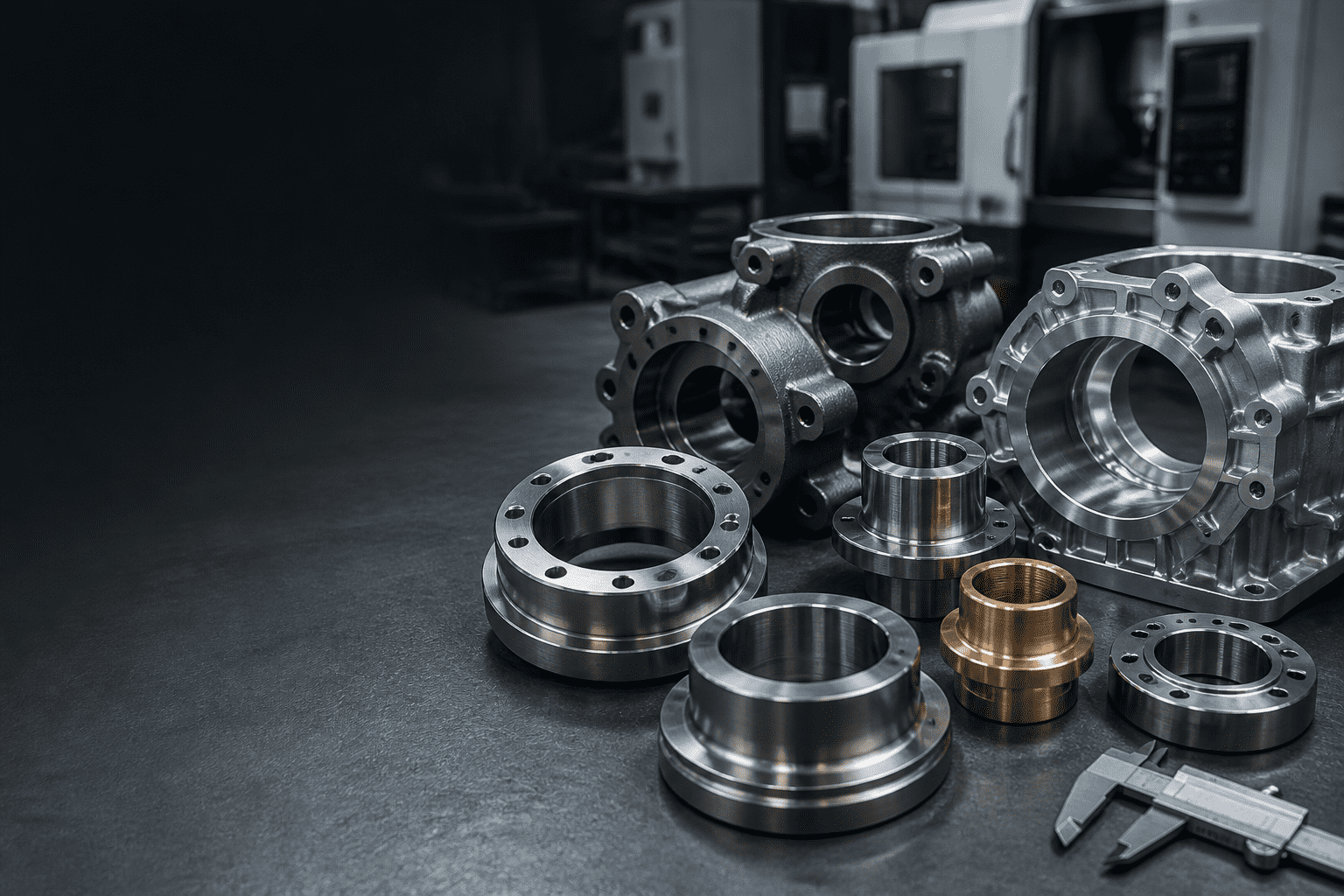
Precision CNC Machined Metal Parts
Use the product scope as a starting point; the actual quote is usually based on drawings, material, tolerance and quantity.
Long shafts, thin-wall rings, multi-face housings and cast blanks need different setup strategies.
Critical dimensions are tied to machining datums so repeated clamping does not create accumulated error.
0.005 mm capability is evaluated by material, feature size, clamping condition and measuring method, not promised blindly for every dimension.
Repeat orders can use dedicated fixtures, robotic loading and key-dimension sampling plans to stabilize output.
Precision casting blanks, cast iron and alloy steel components finished to drawing.
Forging blanks processed through turning, milling, drilling and surface treatment support.
Stress release planning, soft claw design and inner support jigs to control deformation.
Heat treatment, plating, electroless nickel, zinc black and packaging coordination.
Provide 2D drawings with tolerances, datum references and surface finish notes. A STEP file helps evaluate setup and tool access.
Clarify whether the part starts from bar, plate, seamless pipe, precision casting, forging or stamping blank.
Mark dimensions that drive function, assembly, sealing, concentricity, roundness or perpendicularity.
Prototype, trial batch and mass production require different fixture and inspection planning.
Normalizing, stress relief, plating and electroless nickel can influence final dimension planning.
Confirm whether CMM reports, 100% key dimension checks or material evidence are required.
Send material, quantity, tolerance and surface treatment requirements for a process-route review.